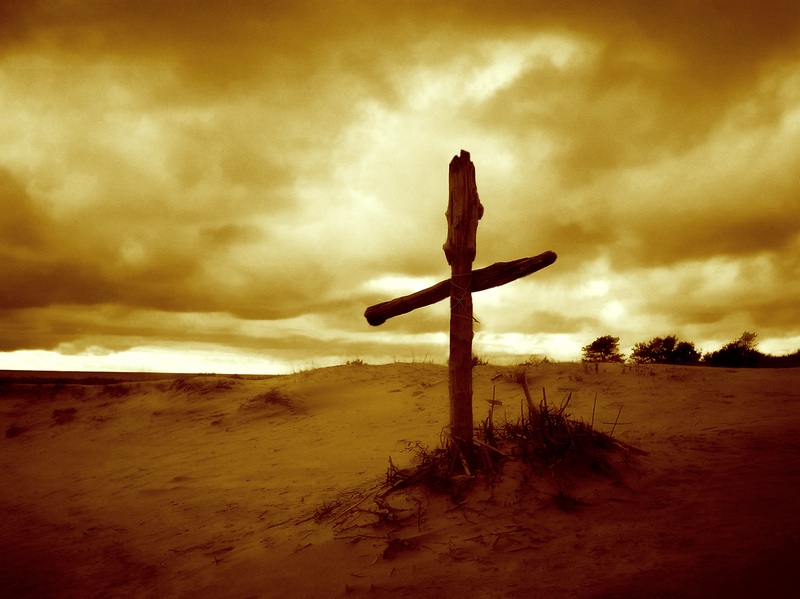
I was not planning to write about the Cross itself as we approach the Feast of the Exaltation of the Cross (14 September) for what do I know so I can write about such mystery? Or what can I say that is worth reflecting upon, when so much has been written. I dare say I am not sure that the rest of this will make sense. But here I go.
When you approach the cross, you are on dangerous ground. Many have written about the topic and many have preached not the least of them The Apostle St Paul, who preached ‘Christ Crucified, a stumbling block to the Jews and foolishness to Gentiles’ (1Cor 1:23).
But it is so much more that attracts me to the Cross. And it is not the suffering, as I try to avoid it in every way and at every possible cost. Even in my stupidity I suffer more in the name of avoiding suffering.
But what leaves me speechless and in awe is rather the Paradox of Cross. The paradox of strength and weakness, joy and sorrow, love and hate, good and evil and ultimately life and death.
Most of us try to seek these paradoxes, virtues and vices, in distinctly different situations, places and choices. We believe they are separate, opposites, unrelated and in fact at odds and enemies. We begin to hate ourselves for having these contradictions in us and in those around us. And so:
- In order to be strong, we annihilate all our weaknesses, deny them, repress them or project them onto others. Or we do worse and use our strengths to hegemonies over others, not to prove that we are strong, but to prove that we are not weak ‘like them’.
- In order to be joyful, we avoid anything and anyone that reminds us of sadness or sorrow and so we become indifferent and switch off thinking that anything sad will affect us and make us unhappy.
- In order to love, we avoid all hateful and difficult situations. We run away and are afraid to confront hate with love. We think it’s not the right time to love. In fact we find more hate to respond to hate, because we think hate and love don’t go together or that love is the weaker of the two.
- In order to do good, we rightfully avoid evil. But in many cases our fear of evil drives us to being silent and afraid to do good and therefore the cycle of evil increases. We forget that evil is the absence of good and that when we are not doing good, evil overwhelms us.
- In order to seek life, and live it to the full, we avoid death. This begins by simply avoiding those smaller ‘deaths’ that are present in our daily struggles, thinking that these situations are ‘life-less’. We simply deny them, ignore them and run to the other side. And this ends with avoiding and even speaking or acknowledging our fate when it comes to the big death, i.e. the end of life. Here we think that death too is ‘resurrection-less’.
To quote St Paul: ‘What a wretched man I am! Who will rescue me?’ (Rm 7:24)
Dare I say the Cross? The Cross is the supreme paradox. It is where these opposites are found. It is the mystery of Christ, of the human and the divine coming together. It is the only place where real transformation can take place. It is a lesson for us all every time we live dualistically.
The Cross is where God’s vulnerability and strength are found, where God was literally ‘naked’ and ’empty’ in Christ and faced the hate because God is Love. It is the place where God gave everything and had nothing left. He was emptied. He ‘spoke’ everything because as St John of the Cross reminds us ‘in giving us, as he did, his Son, who is his one and only Word, he spoke to us once and for all’.
It is the place where courage and fear, abandonment and intimacy meet. It is the space where joy and sorrow, death and life meet. It is the ‘once for all’ (Greek: Ephapax: See Rm 6:10). Why? Precisely because on the cross, we see God in Christ as purely love and love alone can transform.
It is the kind of love that we don’t get. It is counter cultural. The power of this love does not give ‘up’ before evil but gives ‘out’ more love as love waits patiently, nakedly, knowing that it will triumph over evil, hate and death, knowing that it will transform and bring life.
Can we wait patiently in-love to be transformed and to transform? Can we wait in-love naked under the Cross? Mary did. She ‘stood’ lonely and waited (Jn 19:25). And if we manage to wait, for how long? How long before we become cynical and give ‘up’ on love and give ‘in’ to hate, evil and death?
God is eternally waiting, precisely because he waited on the Cross. He waited for three hours in darkness on the Cross (Mt 27:45), a symbolic number, which points to the period needed for real transformation (E.g. Jesus rose on the third day). Now the wait is easier, we are no longer naked for we have ‘been clothed with Christ’ who is with us.
Let us meditate on the mystery Cross. Let us come to the cross when we face weakness, sorrow, hate, evil and ultimately death. Let us not be afraid for in and through the cross we will find strength, joy, good and ultimately life.

 Burning Hearts